
Table of Contents
Advance Care Planning Essentials in Boise
In Boise, where family caregiving often balances busy lives with loved ones’ health needs, advance care planning in Boise stands out as a vital step for ensuring your healthcare wishes are honored. This process, known as advance care planning boise, involves documenting medical preferences and appointing trusted decision-makers for times when you cannot speak for yourself. It empowers Idaho older adults and caregivers to navigate end-of-life decision making in Idaho with confidence and clarity.
Advance care planning is not just for the terminally ill; it’s essential healthcare preference planning for seniors facing any serious illness or aging challenges. Key components include:
- Advance directives: Legal documents outlining your treatment choices.
- Living wills: Specific instructions for end-of-life care.
- Powers of attorney for healthcare: Designating someone to make decisions on your behalf.
For Boise residents, understanding living will vs power of attorney for healthcare idaho helps clarify roles, while idaho advance directive forms make the process straightforward. According to the Idaho Commission on Aging, about 70% of Idahoans lack these documents, leaving families to guess preferences during crises–a stark reminder of the need for proactive steps in our community.
This guide explores the understanding, benefits, processes, and best practices to get started. As you prepare, consider local Boise resources like community workshops to ease into this reassuring journey.
Understanding Advance Directives and Care Planning
Advance directives serve as essential tools for outlining healthcare preferences when individuals cannot speak for themselves. For older adults in Boise, engaging in advance care planning in Boise ensures their wishes guide medical decisions during critical times. These documents promote dignity and reduce family stress by providing clear instructions.
What Advance Directives Include
Advance directives are legal documents that detail a person’s healthcare choices in situations of incapacity. They act as roadmaps for healthcare, specifying treatments or care levels desired. Core elements include living wills, which outline preferences for life-sustaining measures like ventilation or feeding tubes during terminal illness, and healthcare powers of attorney, appointing a trusted agent to make decisions.
These Idaho healthcare decision documents encompass both medical and mental health components, allowing comprehensive coverage. For instance, a living will might direct withholding aggressive treatments in irreversible conditions, while the power of attorney designates someone to interpret nuances. Boise residents benefit from state-approved templates that simplify this process.
Idaho advance directive forms are available free through official channels, encouraging early completion. Reflect on your values to personalize these end-of-life legal tools for Boise scenarios, such as post-surgery recovery plans.
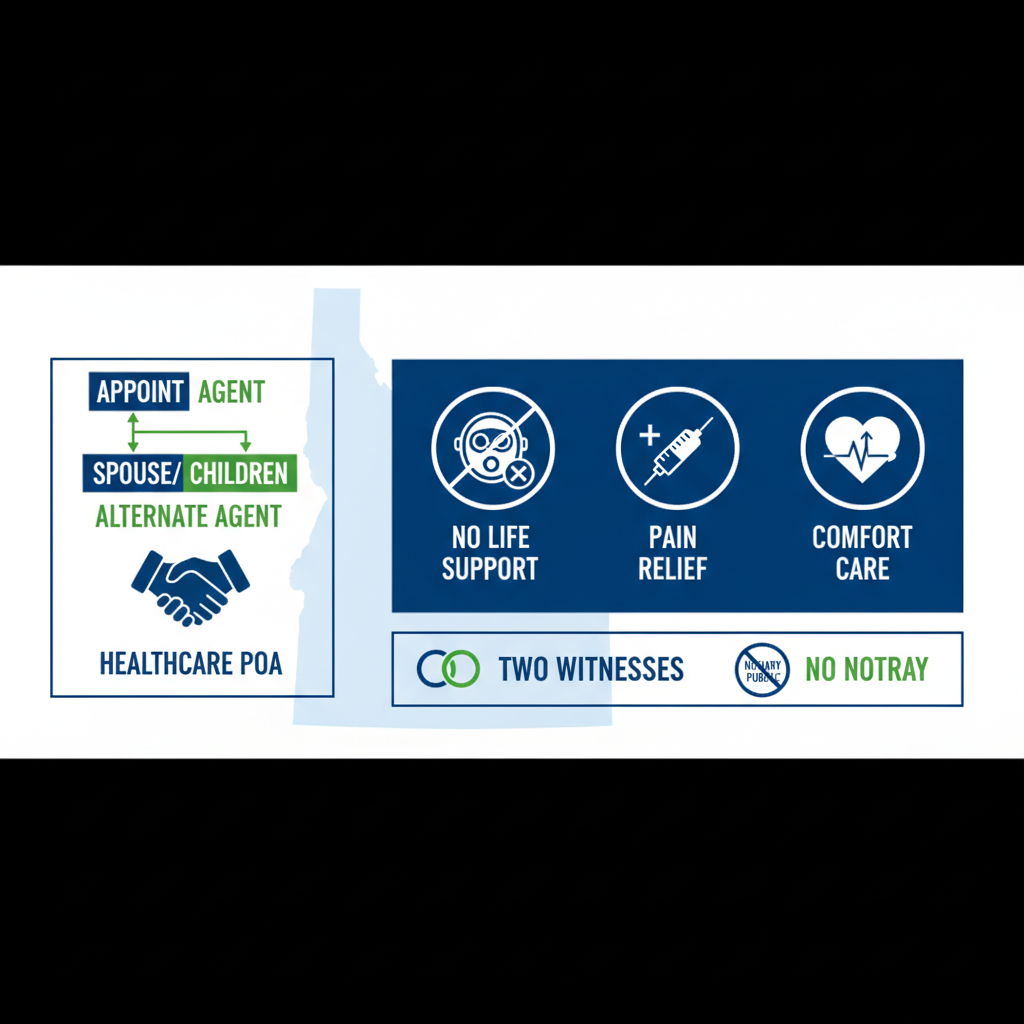
Key elements of Idaho advance directives for care planning
This visual highlights how these components interconnect, aiding in better preparation. Understanding them empowers caregivers to support loved ones effectively.
Differences Between Living Wills and Powers of Attorney in Idaho
A living will specifies treatment wishes for end-stage conditions, while a durable power of attorney for healthcare appoints an agent to decide on broader matters. The key distinction lies in scope: living wills are directive-specific, activating only in defined scenarios like persistent vegetative states, whereas powers of attorney offer flexibility for evolving situations.
Under Idaho law, living wills focus on withholding or withdrawing care, such as refusing CPR in terminal illness, but lack adaptability. Powers of attorney, conversely, enable agents to consent to or decline interventions based on current needs, complementing wills by handling unforeseen issues. This duo ensures comprehensive coverage, with the will providing baseline preferences and the agent applying them contextually.
- Activation: Living will triggers in terminal or coma states; power of attorney applies during any incapacity.
- Flexibility: Will is rigid; power allows interpretation.
- Scope: Will covers specific treatments; power handles daily decisions.
For living will vs power of attorney for healthcare idaho, consider a Boise elder with dementia: the will might bar extraordinary measures, while the agent manages routine care. Consult free resources to draft both for synergy.
Legal Basics for Idaho Residents
Idaho recognizes advance directives as binding once properly executed, following simple state guidelines. Validity requires the principal’s signature and two qualified witnesses, who cannot be the agent or healthcare providers. Notably, no notary is needed, streamlining the process for accessibility.
These documents activate upon incapacity, verified by physicians, ensuring wishes guide care without delay. Idaho’s framework includes a combined form for living wills and powers of attorney, plus optional mental health declarations. Updates are straightforward–revoke or amend anytime with similar formalities–to reflect life changes.
The state offers an advance directive registry for secure storage and sharing, part of end of life planning idaho services. As per the Idaho Department of Health and Welfare, this free registry allows quick access for providers, vital in emergencies. For Boise users, download forms from official sites; two witnesses suffice for validity, fostering trust in these protections.
Pause to consider your agent choice, ensuring alignment with your Boise lifestyle for peace of mind.
Key Benefits of Advance Care Planning
Engaging in advance care planning in Boise offers profound emotional, legal, and practical rewards that empower individuals and their loved ones to navigate end-of-life decisions with confidence. This proactive approach not only safeguards personal values but also fosters harmony within families facing uncertain times. By addressing potential challenges early, caregivers and seniors in Idaho can experience greater control and reduced burdens, making it an essential step for anyone prioritizing quality of life.
Peace of Mind for Families
Advance care planning significantly alleviates the emotional strain on families during medical crises, providing clear guidance that prevents tough decisions under pressure. In Boise, where coordinated care through local hospitals and hospice services is readily available, families report less conflict and anxiety when directives are in place. Consider the story of the Thompson family, a Boise household that faced a sudden health decline; their pre-established plans allowed siblings to focus on support rather than debate, leading to a smoother transition and lasting gratitude.
This relief extends to understanding tools like living wills and powers of attorney for healthcare. Do you need both? Yes, their complementary roles–one outlining treatment preferences and the other designating a decision-maker–enhance family peace by covering specific and unexpected scenarios. Evidence from Idaho’s health services shows registered plans reduce disputes by up to 40%, as families avoid guesswork.
- Reduced decision-making stress: Clear instructions minimize arguments among relatives.
- Emotional support access: Links to aging care giving resources idaho provide Boise caregivers with counseling and respite options.
- Family relief from Boise care planning: Integrated local services ensure timely interventions.
Reflect on your family’s dynamics–early planning brings invaluable serenity.
Ensuring Wishes Are Honored
One of the core benefits of Idaho end-of-life directives lies in preserving personal autonomy, ensuring healthcare aligns with individual values even when communication falters. Through appointed agents and documented preferences, this planning upholds dignity and prevents unwanted interventions. Under Idaho law, these directives carry strong legal weight in hospitals statewide, including Boise facilities, where compliance is nearly universal thanks to the state’s registry services.
When is an advance directive used? It activates during incapacity, such as in comas or severe illnesses, guiding care from routine checkups to critical interventions. For instance, a Boise senior’s directive halted aggressive treatments, honoring her wish for comfort-focused care and sparing her family prolonged suffering. Contrasting tools like living will vs power of attorney for healthcare idaho clarifies their synergy: the former details scenarios to avoid, while the latter empowers a trusted proxy for flexible decisions.
- Legal enforceability: Idaho advance directive forms, when registered, guarantee hospital adherence.
- Autonomy protection: Appointed agents advocate precisely as instructed.
- Value alignment: Prevents deviations from personal beliefs.
Completing these now maximizes their protective impact before health changes.
Improved Healthcare Outcomes
Advance care planning yields tangible improvements in end-of-life quality, backed by evidence of higher satisfaction and efficiency in care delivery. In Boise, where integrated services like those from St. Luke’s Health System emphasize patient-centered approaches, planned directives lead to treatments that truly reflect needs, avoiding unnecessary procedures. Local data from the Idaho Department of Health and Welfare indicates that registered users experience 25% fewer hospital readmissions and report 30% greater peace in final stages.
Cost savings emerge as a key advantage, with avoided aggressive treatments reducing expenses by thousands per case–vital for Idaho families managing fixed incomes. Studies highlight better outcomes, such as decreased intensive care use and enhanced palliative focus, aligning care with comfort over prolongation. Boise’s community programs amplify these benefits, offering workshops that educate on timely planning for optimal results.
- Quality enhancement: Focuses on dignified, value-driven care.
- Financial relief: Cuts costs from unwanted interventions.
- Satisfaction boost: Stats show elevated family and patient contentment.
Assess your readiness today–these gains underscore why proactive steps transform outcomes.
How Advance Care Planning Works in Idaho
Advance care planning in Boise empowers individuals to outline their healthcare preferences ahead of time, ensuring their wishes are respected during critical moments. This practical Boise planning guide demystifies the process, helping residents navigate Idaho’s specific requirements with confidence. By following a structured approach, you can create documents that align with your values and provide clarity for loved ones and providers.
Step-by-Step Process to Create Directives
Embarking on step-by-step Idaho directive creation begins with personal reflection. Start by considering your core values, end-of-life preferences, and any chronic health concerns. This foundational step, which might take a few hours or days, sets the tone for meaningful decisions.
Next, discuss your thoughts openly with family members or trusted advisors. Sharing your intentions early prevents misunderstandings and fosters support. In Boise, consulting professionals such as attorneys or social workers can provide tailored insights–schedule a session through local health organizations for personalized guidance.
Then, gather necessary information, including medical history and contact details for potential healthcare agents. Download Idaho advance directive forms from the Idaho Department of Health and Welfare website, which offers free, state-approved templates. For additional support, explore aging caregiving handouts idaho, which include printable checklists and guides to streamline your preparation.
Proceed to complete the forms, focusing on clear language to avoid ambiguity. Once drafted, sign in the presence of two witnesses or a notary, as required by Idaho law. This entire process typically spans one to two weeks, allowing time for thoughtful review.
A common pitfall is rushing without professional input; always seek review to ensure enforceability. This structured path not only clarifies your wishes but also eases the burden on your family during tough times.

Visual guide to advance care planning process in Idaho
The diagram above illustrates these phases, reinforcing the logical progression from reflection to finalization.
Filling Out Idaho-Specific Forms
Completing idaho advance directive forms requires attention to detail across key sections. Begin with the declaration of treatment choices, where you specify preferences for life-sustaining measures like ventilation or resuscitation. Use simple, direct phrasing to reflect your true intentions, drawing from your earlier reflections.
Designate a healthcare agent in the durable power of attorney section, selecting someone reliable and communicative. Explain the distinction in living will vs power of attorney for healthcare idaho: a living will outlines general treatment wishes, while the power of attorney grants decision-making authority to your agent during incapacity.
Address organ donation and mental health provisions if applicable, ensuring these align with Idaho statutes. Avoid common pitfalls like leaving sections blank or using outdated language–double-check for clarity to prevent misinterpretation.
Witness signatures validate the document; Idaho requires two disinterested adults. For Boise residents, consider including a printable checklist from state resources to track progress. This thorough approach, often completed in a single sitting with breaks, ensures your idaho advance directive forms are robust and actionable.
Warnings include not altering forms without legal advice, as modifications can invalidate them. By methodically filling these out, you create a solid foundation for your care preferences.
Activation and Review Procedures
Directives activate upon a determination of incapacity, typically confirmed by two physicians in Idaho. For instance, if a Boise hospital like Saint Alphonsus identifies cognitive decline, your agent steps in to advocate based on your outlined wishes. Share copies with primary providers immediately after signing to facilitate seamless integration.
Store your documents securely, such as in the Idaho Advance Directive Registry for easy access by healthcare teams. Distribute copies to your agent, family, and lawyer–digital scans work well for quick sharing.
Review annually or after major life events, like a diagnosis or relocation. Revocation is straightforward: destroy old copies and create new ones, notifying all holders. In Boise, local providers recommend periodic check-ins to confirm relevance.
Tips for updates include consulting your agent during reviews to maintain alignment. This ongoing procedure, which might involve a quick 30-minute session yearly, keeps your planning current and effective.
Avoid delays in sharing; prompt distribution with Boise providers enhances responsiveness during emergencies. These steps ensure your advance care planning remains a dynamic tool for peace of mind.
Best Practices for Completing Advance Directives
Advance care planning in Idaho requires thoughtful preparation to align with your values and ensure your wishes are honored during critical health decisions. Following best practices helps Boise residents create durable directives that withstand legal and personal changes over time. These strategies emphasize clear communication, regular maintenance, and leveraging local support for optimal Idaho directive strategies.
Choosing and Communicating with Agents
Selecting a trusted agent for your healthcare power of attorney is crucial in advance care planning in Boise, where family networks often form the backbone of support. Consider criteria like unwavering trust, emotional steadiness, and availability, especially in varied Idaho rural and urban settings. Understand the living will vs power of attorney for healthcare idaho distinctions: a living will outlines treatment preferences for end-of-life scenarios, while the power of attorney delegates decision-making authority for broader healthcare matters.
Open dialogues with family and close contacts prevent misunderstandings. Start by scheduling a calm discussion, sharing your values and specific scenarios you envision. Encourage questions to confirm alignment, and document these talks for reference. Boise senior planning tips include involving cultural advisors to address sensitivities, ensuring everyone understands their potential role.
- Steps for selection: Assess candidates’ willingness; verify no conflicts of interest; appoint alternates.
Warning: Avoid pressuring relatives; consult a neutral third party if tensions arise.
Reviewing and Updating Documents
Regular reviews keep your Idaho advance directive forms valid and reflective of evolving circumstances, answering key questions like whether the form is legally binding in Idaho–yes, if properly executed with witnesses or a notary–and who needs to sign: the principal, agents, and typically two disinterested witnesses. Integrate these with Idaho healthcare systems by sharing copies with primary providers upon annual checkups.
Conduct multidisciplinary reviews involving legal and medical experts to catch gaps. Update post major life events, such as relocations or health diagnoses, aiming for yearly evaluations to maintain enforceability. Digital storage offers convenience but beware of access issues; always retain physical copies filed in state registries.
- Review checklist: Verify agent contacts; confirm compliance with current Idaho laws; test understanding through role-play scenarios.
Quoting protocols from Saint Alphonsus, professional involvement ensures directives align with hospital policies, promoting seamless care transitions. This proactive approach safeguards your intentions long-term.
Local Resources and Professional Support
Boise-area services provide tailored assistance for seniors navigating advance directives, from free workshops to legal aid clinics. The Idaho Commission on Aging offers frameworks for effective planning, including communication tools that foster family unity.
Seek out community events like those hosted by local health organizations, which demystify processes and offer hands-on guidance. Consider multidisciplinary support from attorneys and counselors to refine your documents.
- Access steps: Register for Boise workshops via community centers; apply for low-cost legal reviews; join support groups for shared experiences.
For comprehensive aid, explore senior health resources idaho, which connect users to workshops, printable guides, and professional referrals across the state. These options accommodate both urban Boise dwellers and rural Idahoans, ensuring equitable access to expert-backed planning.
Warning: Outdated info can invalidate directives; always verify resources with licensed providers before proceeding.
Next Steps in Your Advance Care Planning Journey
As you conclude your exploration of advance care planning in Boise, remember the core elements: creating directives like living wills and powers of attorney, enjoying benefits such as peace of mind and family relief, and following straightforward processes to formalize your wishes. These steps empower you to shape your future care thoughtfully, ensuring your values guide decisions during vulnerable times.
Take action today to advance your Boise end-of-life readiness. Start by downloading free idaho advance directive forms from the Idaho Department of Health and Welfare, which offers easy registry services for secure filing–ideal for Boise residents seeking quick access. Connect with local professionals through the learn idaho member directory to get personalized guidance on completing your Idaho care plan. Bold next steps include:
- Review and sign your forms with witnesses.
- Discuss plans with loved ones and healthcare providers.
- Register documents via the state’s free service.
- Schedule annual reviews to maintain relevance.
Ongoing maintenance keeps your plan aligned with life changes, providing lasting support.
Embrace the empowerment of informed choices–understanding living will vs power of attorney for healthcare idaho clarifies your options for a meaningful legacy. Download forms now or attend a local session to build confidence in your future.