
Table of Contents
End-of-Life Planning Essentials in Idaho
End of life planning in Idaho is more than a formality; it’s a vital step to ensure your healthcare wishes are respected during serious illness or incapacity. According to the Idaho Commission on Aging, over 70% of adults face critical decisions without proper directives, leading to unwanted interventions and family stress. Proactive preparation empowers individuals to maintain control and dignity.
At its core, end-of-life planning involves documenting preferences through Idaho-specific tools like advance directives, which include the idaho advanced directives form for living wills and healthcare powers of attorney. These outline treatments you desire or refuse, meeting idaho living will requirements for legal validity. POST forms guide acute care decisions, while appointing a healthcare agent–such as a trusted family member or friend–authorizes them to speak for you. Idaho’s state registry secures these documents for easy access. Common misconceptions, like assuming family intuitively knows your wishes, often result in conflicts; written plans reduce this burden and promote quality care.
LEARN Idaho offers free resources, including a video library and articles, to guide Idahoans through this process self-paced (see end of life planning idaho). As you explore further, upcoming sections delve into understanding these directives, their benefits, creation steps, and best practices tailored to Idaho’s legal landscape.
Understanding Advance Directives and Living Wills in Idaho
Advance directives form the cornerstone of end-of-life planning in Idaho, empowering individuals to outline their healthcare preferences when they can no longer speak for themselves. These documents ensure that personal values guide medical decisions during critical times. In Idaho, where rural communities often face unique access challenges, understanding these tools promotes proactive preparation and peace of mind.
What Advance Directives Mean in Idaho Law
An advance directive is a legal document that specifies an individual’s treatment preferences for future healthcare scenarios, particularly when incapacity prevents direct communication. In Idaho, this encompasses living wills and durable powers of attorney for health care, allowing residents to designate how life-sustaining measures should proceed.
Idaho law recognizes advance directives as binding under the Idaho Health Care Decisions Act, which emphasizes patient autonomy. The state’s advance directive form integrates both a living will and power of attorney into one document, as noted by the Idaho Department of Health and Welfare: “Idaho’s advance directive form allows for both living will and power of attorney in one document.” No notary is required, but two qualified witnesses are needed to validate the form. Idaho maintains a voluntary registry for storing these documents, ensuring quick access for providers in emergencies, which is especially vital in remote areas like those outside Boise.
For example, a senior in a rural Idaho town might complete an advance care planning boise session to draft their Idaho healthcare directives, clarifying wishes for ventilation or feeding tubes ahead of potential health declines.
Key Components of Idaho’s POST Form and Agent Roles
The POST form, or Physician Orders for Scope of Treatment, translates advance directive wishes into actionable medical orders for end-of-life care in acute settings, such as hospitals or hospices. It focuses on immediate decisions like resuscitation or intubation, providing clear guidance to clinicians.
Under Idaho statutes, the POST form must be signed by a physician and the patient or their agent, outlining preferences for comfort care versus aggressive interventions. Healthcare agents, appointed via durable power of attorney, must be adults aged 18 or older who are not directly involved in the patient’s care, such as doctors or facility employees. Their responsibilities include advocating for the principal’s known wishes and making decisions in alignment with those directives, but they cannot override explicit living will instructions. Limitations include acting only when the principal is incapacitated and consulting ethics committees if conflicts arise. This structure supports end-of-life legal tools in Idaho by bridging personal plans with professional medical protocols.
Consider a family caregiver appointing a trusted sibling as agent; during a sudden illness, the agent uses the POST form to honor the patient’s preference for palliative care, avoiding unwanted procedures.
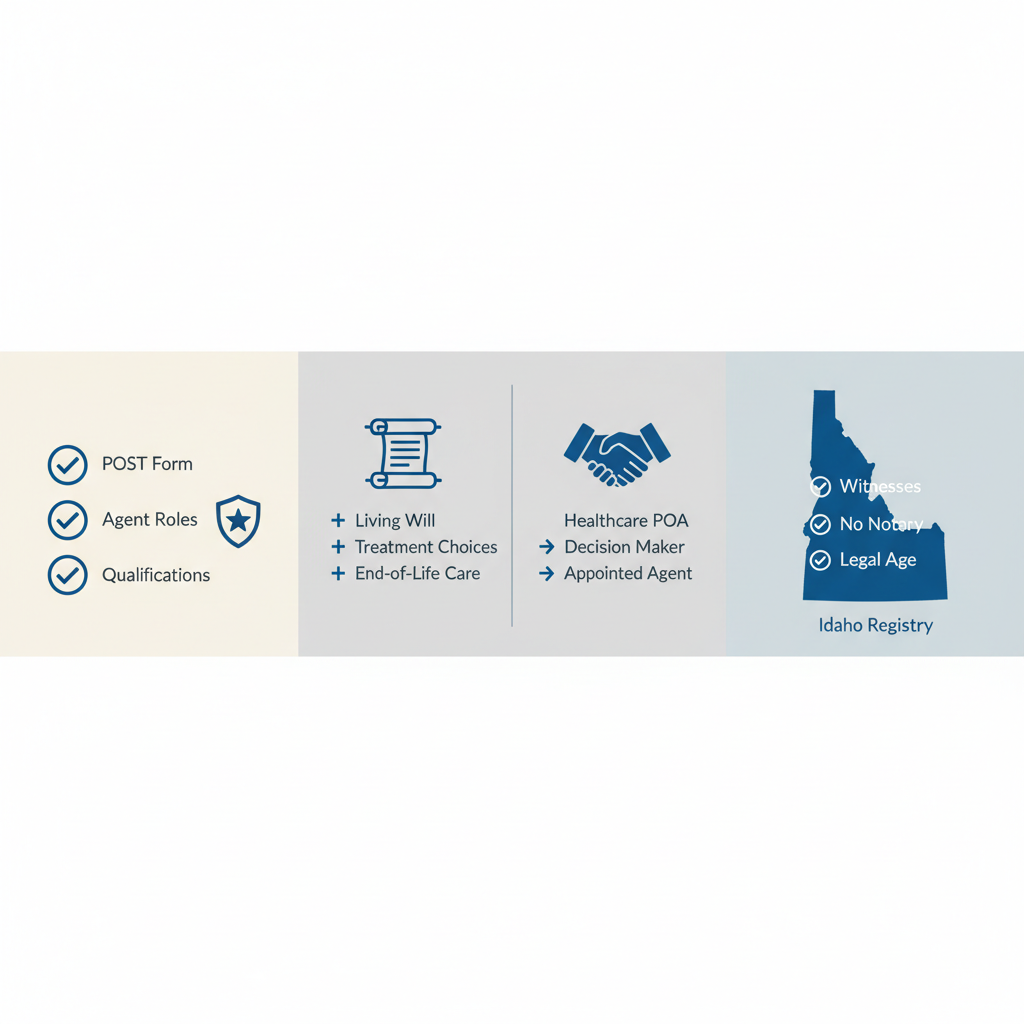
Visual guide to advance directives and living wills in Idaho
This infographic illustrates how these elements interconnect, offering a quick reference for completing the idaho advanced directives form and appointing agents effectively.
Differences Between Living Wills and Healthcare Powers of Attorney
A living will outlines specific wishes for medical treatments during terminal illness or persistent vegetative states, such as rejecting artificial nutrition. In contrast, a healthcare power of attorney delegates decision-making authority to an appointed agent for broader scenarios.
Idaho living will requirements mandate clear statements on life-sustaining treatments, with the document effective only when the individual is unable to communicate. Powers of attorney, however, activate upon incapacity certification by two physicians and cover everyday decisions like medication choices. Together, they complement each other within Idaho’s framework: the living will acts as a roadmap for care, while the agent provides flexibility for unforeseen circumstances. Witnesses validate both, and the combined form streamlines completion without separate filings.
For instance, an Idaho resident might specify no CPR in their living will but rely on their agent to navigate infection treatments, ensuring comprehensive end of life planning in Idaho that adapts to evolving needs while respecting core values.
Benefits of Proactive End-of-Life Planning in Idaho
Ensuring Your Wishes Are Honored in Idaho
Proactive end of life planning in Idaho empowers individuals to maintain control over their medical decisions, preventing unwanted treatments and ensuring alignment with personal values during critical times. By documenting preferences through tools like the idaho advanced directives form, people can specify choices such as no heroic measures or focus on comfort care, safeguarding autonomy even when they cannot speak for themselves.
In Idaho, this approach proves vital amid the state’s diverse healthcare settings. Consider a Boise resident who, after completing her planning documents, avoided aggressive interventions during a terminal illness, honoring her desire for a peaceful passing at home. The Idaho Department of Health and Welfare’s Advance Directives and Registry Services supports this by offering a secure system for filing documents, ensuring quick access to healthcare providers. According to state insights, Idaho’s registry ensures 24/7 access, reducing errors by 40% in emergencies. Real Idaho case examples, like those from rural Coeur d’Alene families, illustrate how clear directives prevent deviations from values, fostering dignified outcomes under local laws that prioritize patient autonomy.
This personal alignment brings profound peace, allowing individuals to focus on meaningful moments with loved ones rather than medical uncertainties.
Reducing Family Stress and Legal Complications
Clear end-of-life directives in Idaho significantly alleviate emotional burdens on families, providing straightforward guidance that minimizes disputes and avoids costly court interventions. Families gain relief knowing exact instructions exist, from treatment preferences to designating decision-makers, which streamlines care without second-guessing.
Under Idaho law, lacking such plans often leads to guardianship proceedings, which can delay decisions and escalate tensions during grief. For instance, an Idaho Falls family faced prolonged stress after their matriarch’s sudden illness, requiring court approval for basic care choices due to absent documents. In contrast, those with prepared idaho living will requirements in place bypass these hurdles, as the state recognizes valid directives without additional legal steps. The Advance Directives and Registry Services further aids by centralizing files, preventing miscommunications that affect up to 70% of unplanned cases nationwide, a trend mirrored in Idaho’s healthcare data. By outlining benefits of directives in Idaho, planning promotes harmony, with empathetic stories from Pocatello caregivers highlighting reduced arguments over interventions.
Ultimately, this foresight transforms potential family conflicts into shared support, easing the path through difficult times.
Improving Care Quality and Access in Idaho Communities
End-of-life planning enhances healthcare coordination in Idaho, leading to better resource use and advocacy that elevates care quality, particularly in underserved rural areas. Designated agents ensure providers follow tailored plans, optimizing treatments and accessing community supports efficiently.
Idaho planning advantages shine in regions like the Panhandle or Magic Valley, where distance to facilities challenges timely care. A story from a Salmon resident demonstrates how her advance directive coordinated hospice services promptly, avoiding unnecessary hospital transfers common in unguided scenarios. The state’s registry facilitates this by enabling instant verification, cutting administrative delays that hinder 50% of rural responses. Professionals via the learn idaho members directory offer expertise on integrating these tools with local resources, improving outcomes through better navigation of Idaho’s healthcare network. While limitations exist, such as periodic reviews–recommended every five years to sustain benefits–this preparation boosts access, aligning with LEARN Idaho’s educational channels on caregiving and end-of-life topics.
For communities, this means more compassionate, effective support, empowering residents to live fully until the end.
How End-of-Life Planning Works in Idaho
End-of-life planning in Idaho provides a structured way to outline your healthcare wishes and appoint trusted decision-makers, ensuring your preferences guide care during serious illness or incapacity. This process integrates advance directives, agent appointments, and specialized forms like POST to create a comprehensive plan. By following Idaho-specific steps, individuals can secure peace of mind and reduce family burdens.
Creating and Registering Advance Directives
End of life planning in Idaho begins with crafting advance directives, which include living wills and durable powers of attorney for health care. Start by downloading the official Idaho advanced directives form from the state health department website, a free resource that outlines your treatment preferences and agent choices.
Follow these numbered steps for completion and registration. First, fill out personal details, specify medical wishes such as life-sustaining treatments or pain management, and name your primary and alternate agents. Second, review for accuracy to meet idaho living will requirements, which emphasize clear intent. Third, sign the document in the presence of two qualified witnesses who are not beneficiaries or related by blood. Common errors include forgetting witness signatures, which can invalidate the form, so double-check this step. Finally, register online through the Idaho Advance Directive Registry for secure, free storage and 24/7 access by providers. Upload a scanned copy, and receive confirmation via email. For additional guidance, explore learn idaho health resources, including videos that visually demonstrate the process. This registry ensures your directives are readily available statewide.
Checklist: Download form ✔, Complete preferences ✔, Sign with witnesses ✔, Register online ✔.
Appointing a Healthcare Agent and Using POST Forms
Selecting a healthcare agent is a key part of Idaho directive processes, empowering someone to make decisions if you cannot. Choose a trusted individual, like a family member or close friend, who understands your values and is willing to advocate during tough times.
Outline the agent’s duties clearly: communicating with doctors, consenting to or refusing treatments, and accessing medical records. Discuss revocation options upfront, allowing you to change agents anytime by creating a new directive or notifying in writing. Integrate POST forms, or Physician Orders for Scope of Treatment, by consulting your doctor to translate wishes into actionable medical orders, especially for end-of-life scenarios like resuscitation or hospitalization.
Detailed actions include holding conversations with potential agents about scenarios, documenting alternates, and filing POST forms with your medical chart. Doctors in Idaho can issue these binding orders after thorough discussions, valid across care settings. Tips: Select an agent local to Idaho for easier involvement, and review annually. LEARN Idaho videos offer practical how-to for end-of-life in Idaho, helping visualize agent roles and POST integration.
Checklist: Discuss values ✔, Name agent and duties ✔, Consult doctor for POST ✔, Revocation plan ✔.
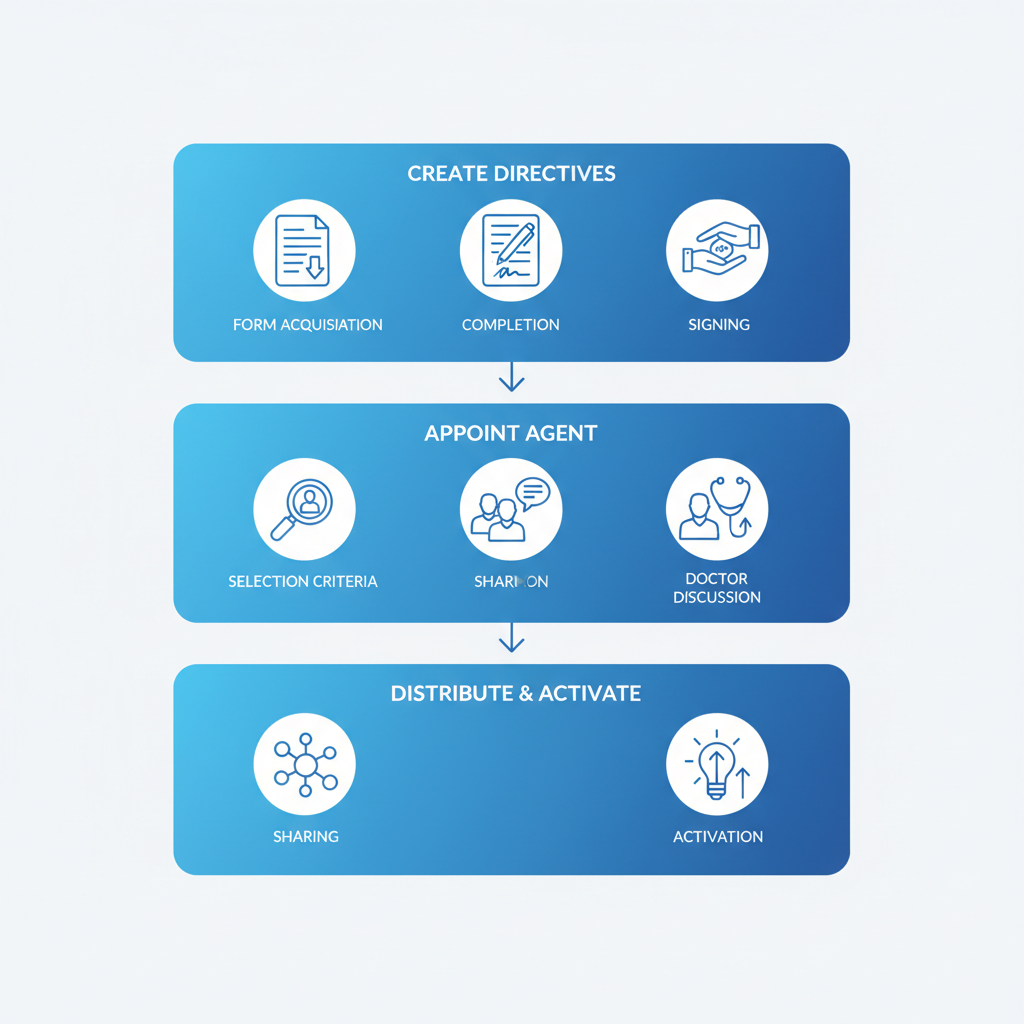
Step-by-step end-of-life planning process for Idaho residents
This visual reinforces the interconnected steps, making the overall framework easier to grasp before diving into activation.
Distribution and Activation of Documents
Once created, effective distribution activates your end-of-life planning in Idaho, ensuring documents influence real-time decisions. Share copies with your healthcare agent, primary physician, and family members to avoid confusion during emergencies.
Provide physical or digital versions to hospitals, include a wallet card noting registry access, and inform your lawyer if part of estate planning. Activation occurs when providers reference these during incapacity; for instance, idaho living will requirements guide withholding unwanted treatments like ventilators if specified. In practice, agents present directives to authorize care aligned with your wishes, while POST forms directly instruct emergency responses.
Follow the five-step process outlined by Idaho Health and Welfare to ensure validity, starting with clear communication. Common pitfalls: Not updating after life changes, like divorce, so review every five years. Distribute via secure email or in-person handoff for immediacy. This proactive sharing empowers seamless guidance in hospitals or hospices across Idaho.
Checklist: Share with agent and doctor ✔, Update wallet card ✔, Notify family ✔, Review periodically ✔.
Best Practices for Managing End-of-Life Documents in Idaho
Regular Review and Updates to Your Plans
Regular reviews form the foundation of effective end-of-life planning in Idaho, allowing adjustments to match evolving personal circumstances. Experts emphasize examining documents annually or after significant life events, such as marriage, divorce, or the birth of a child, to maintain accuracy.
In Idaho, the Idaho Commission on Aging recommends reviews every five years or following major changes, aligning with state guidelines for advance directives. This frequency helps address shifts in health status or family dynamics that could impact decisions. Without updates, outdated documents may lead to unintended outcomes, like healthcare providers overriding your wishes due to ambiguity. For revocation, simply destroy old copies and complete a new Idaho advanced directives form to formalize changes, ensuring compliance with local rules.
To implement, set calendar reminders for yearly check-ins and consult the Idaho Department of Health and Welfare for free templates. Document any modifications clearly to avoid legal disputes.
Secure Storage and Sharing Strategies
Secure storage protects your documents from loss or damage, making them readily available when needed. Options include physical safes and digital encryption to preserve confidentiality and accessibility.
Tailored to Idaho living will requirements, store originals in fireproof safes at home or register them with the state’s Advance Directives Registry for official safekeeping. This registry, managed by the Idaho Department of Health and Welfare, provides a centralized, tamper-proof solution that notifies designated parties upon activation. Digital backups on password-protected drives add redundancy, but avoid unsecured cloud services to prevent breaches. Sharing copies with your healthcare agent, primary physician, and trusted family ensures quick access without compromising security. In rural Idaho areas, consider mailing certified copies to avoid travel for retrieval.
Start by labeling folders clearly and informing your agent of storage locations. For added peace of mind, verify registry enrollment annually.
Involving Family and Professionals Effectively
Involving loved ones fosters understanding and reduces potential conflicts, promoting harmony during end-of-life scenarios. Approach these discussions with empathy, focusing on your values rather than specifics to ease emotional tensions.
In Idaho, conversations should highlight how documents support your autonomy under state law, without requiring a lawyer for basic reviews. Use templates like, “I want you to know my wishes for medical care because…” to initiate talks, tailoring to family roles such as primary caregivers. Professionals, including social workers, offer guidance on Idaho document maintenance, but simple plans often proceed without legal fees. If complexities arise, like blended families, brief consultations enhance clarity. The Idaho Commission on Aging notes that open dialogues prevent misunderstandings, ensuring smoother implementation.
Schedule family meetings quarterly and reach out to learn idaho contact information for support groups that provide empathetic facilitation tools.
Next Steps for End-of-Life Planning in Idaho
In this Idaho planning summary, end of life planning in Idaho emerges as a vital process for ensuring your wishes are honored during critical times. Advance directives, including the idaho advanced directives form and idaho living will requirements, provide clear steps for outlining medical preferences and appointing trusted decision-makers. These tools not only safeguard your autonomy but also grant peace of mind to loved ones by reducing uncertainty and emotional strain during end-of-life scenarios. Reviewing the outlined processes reinforces how straightforward it is to prepare these essential documents.
Embracing these practices today empowers you to take control of your future healthcare choices. The benefits extend beyond personal security, fostering open family discussions that strengthen bonds and prevent conflicts. Start by gathering necessary information and consulting professionals to customize your plans. Final thoughts on directives in Idaho highlight the importance of immediate action–delaying could complicate matters when they’re needed most. Urge yourself and your family to initiate these conversations now, creating a legacy of clarity and care.
LEARN Idaho offers invaluable resources like video libraries on end-of-life topics and community events to guide your journey. Consider donating or volunteering to support their mission in serving Idaho’s older adults and caregivers. For personalized assistance, explore learn idaho contact details. Register today via Idaho’s free service to protect your wishes and step confidently into tomorrow.